Cinema essay
Iceberg A23a: Antarctica's Wandering Giant
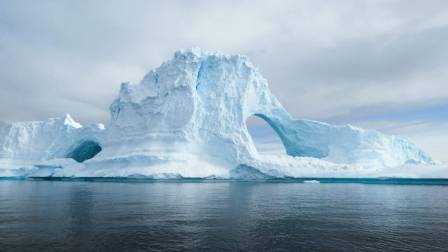
Icebergs are one of the most recognizable symbols of the frozen landscapes of Antarctica and the Arctic. Some have even drifted into major shipping routes and become part of maritime history. Among the most famous is the iceberg connected with the sinking of the RMS Titanic in 1912, while others have gained attention because of their extraordinary size or their effects on shipping.
Isara Blake
Desk writer
Spotlight note
The full essay continues below the still.
Reel
Midnight Cinema Desk
Icebergs are one of the most recognizable symbols of the frozen landscapes of Antarctica and the Arctic. Some have even drifted into major shipping routes and become part of maritime history. Among the most famous is the iceberg connected with the sinking of the RMS Titanic in 1912, while others have gained attention because of their extraordinary size or their effects on shipping.
In the frozen expanse of Antarctica, another enormous iceberg has attracted worldwide attention: Iceberg A23a. Covering almost 4,000 square kilometers, this enormous tabular mass of ancient, densely compacted ice is larger than some countries, and its journey has continued for decades. Travelers exploring Antarctica may even have the opportunity to see this immense frozen giant, which would be impossible to overlook if an expedition route crosses its path.
How Old Is Iceberg A23a?
The ice contained within A23a is much older than the iceberg itself. Its ice originated from glaciers that have supplied Antarctica’s ice shelves over thousands of years. A23a itself was created in 1986 when it separated from the Filchner-Ronne Ice Shelf.
At that time, A23a was one of several enormous icebergs naturally produced as part of Antarctica’s long-term glacial processes. However, unlike many icebergs that eventually melt away or break into smaller pieces, A23a became firmly lodged on the seafloor of the Weddell Sea because of its enormous mass and weight. It remained grounded there for almost four decades, effectively becoming a permanent frozen presence in the region.
Where Is Iceberg A23a Now?
A major change occurred in late 2023, when satellite observations revealed that A23a had finally risen from the seabed and started moving. Its release was likely influenced by years of impacts from other icebergs, pressure from surrounding sea ice, and the gradual erosion of its underside by warmer water.
Once it became mobile, winds and ocean currents carried A23a into the Antarctic Circumpolar Current, one of the planet’s most powerful ocean currents, which flows around Antarctica. After entering open water, the iceberg slowly began moving toward the South Atlantic, leaving the Weddell Sea and the Antarctic Peninsula behind.
By March 2025, A23a had become grounded once again, this time on the seafloor approximately 73 kilometers, or 45 miles, from the coast of South Georgia.
In August 2025, scientists with the British Antarctic Survey reported that A23a had started breaking apart. The enormous iceberg was producing huge pieces of ice that were drifting northwest toward an area known as iceberg alley. After intermittently holding the title of the world’s largest iceberg since the 1980s, A23a lost that distinction in August 2025 to another iceberg, D15a, which remained firmly attached to the Antarctic coastline.
The breakup of A23a continued while the iceberg remained grounded on the seabed south of South Georgia. NASA imagery from January 2026 showed that the iceberg had become smaller following several major breakups during the summer of 2025. Researchers also observed blue areas across the ice surface, indicating meltwater. This meltwater was contributing to the accelerating deterioration of the iceberg.
Reports from January 2026 suggested that A23a could be only days or weeks away from completely disintegrating, potentially bringing an end to a remarkable history lasting more than four decades.
The Impact of Iceberg A23a on Antarctica
The original calving of A23a from the Filchner-Ronne Ice Shelf was not considered to be directly caused by climate change. However, the growing frequency of major calving events, together with their interaction with warmer ocean waters, forms part of a broader pattern of instability affecting several Antarctic ice shelves.
As enormous icebergs move through the ocean, their undersides can scrape across the seafloor and release nutrients into surrounding waters. This process can influence nearby marine life in both beneficial and harmful ways. Large icebergs can also release substantial quantities of freshwater into sub-Antarctic environments, potentially altering ocean circulation and the way nutrients are mixed within the water.
Scientists continue to debate the potential effects of A23a on the wildlife of South Georgia. The iceberg could interfere with access to feeding areas used by penguins and seals if it blocks important routes or coastal waters. For researchers, however, large icebergs such as A23a provide valuable opportunities to study how Antarctica is responding to global warming and how enormous drifting ice masses interact with local ecosystems and biodiversity.
Iceberg A23a Facts
A23a ranks as the eighth-largest iceberg in recorded history. The largest verified iceberg, B-15, was nearly three times larger than A23a.
When A23a finally separated from the seabed in 2023, its area was comparable to the U.S. state of Rhode Island and approximately twice the size of Greater London.
The enormous iceberg is estimated to have a mass of around one trillion tons.
A23a remained trapped on the seafloor of the Weddell Sea for nearly 40 years.
In 1956, the USS Glacier reported seeing an iceberg measuring approximately 333 kilometers long and 100 kilometers wide. If those measurements were accurate, it would have been the largest iceberg ever recorded, although the reported dimensions remain disputed.
Get Up Close and Personal With Icebergs in Antarctica
A23a is exceptionally large, but it represents only one of many different iceberg forms that travelers can encounter during an Antarctic expedition. Smaller pieces of floating ice are commonly called growlers and bergy bits, while larger icebergs can range from small to extremely large according to their dimensions.
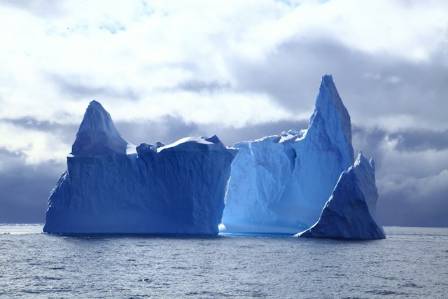
Icebergs are generally divided into two broad categories: tabular and non-tabular. Tabular icebergs have steep vertical sides and relatively flat upper surfaces. Non-tabular icebergs can be further classified into several shapes, including dome, pinnacle, wedge, dry-dock, and blocky forms.
Whatever type of iceberg you encounter, Antarctica offers countless opportunities to witness these frozen structures in their natural environment. Seeing the interaction between ice, seawater, and time can be a powerful reminder of how closely connected the different parts of our planet are and how constantly Earth’s polar environments change.
As A23a continues its slow movement through the open ocean and gradually breaks apart, it leaves behind more than fragments of ice. Its decades-long journey records ancient glacial processes as well as the ongoing changes taking place across our planet. The story of A23a ultimately reflects the immense influence of time, natural forces, and the accelerating effects of human activity on Earth’s frozen regions.
More from the desk

· Mono
Digital chips vs analog chips
In semiconductor technology, digital chips and analog chips are often discussed together because they serve very different purposes, and the distinction between them is quite clear. Below is an explanation of how digital chips differ from analog chips.

· Mono
Minimalist Travel Wardrobe Ideas That Still Show Personality
A minimalist travel wardrobe does not need to look boring, limited, or predictable. With careful planning and a few well-chosen pieces, you can reduce your luggage, stay comfortable, and still create outfits that reflect your personality wherever you go.
· Mono
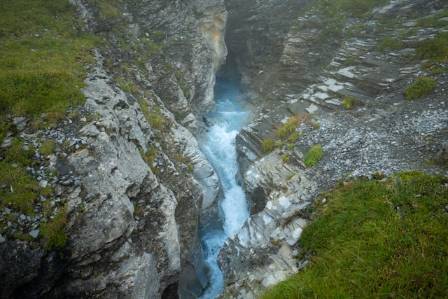
Ammonoosuc Ravine Waterfalls
The trailhead and parking area are located on Base Station Road in Chandler’s Purchase, New Hampshire, while the cascades themselves are located in Sargent’s Purchase. Base Station Road, marked with a sign for the Cog Railway, branches off Route 302 about 4.4 miles east of Route 3.

· Mono
A Comprehensive Guide to Sculpting Animals with Clay Armatures
Sculpting animals can be a complex task because our brains often rely on general perceptions rather than anatomical facts. Features like thick fur or our emotional bond with a pet can obscure the actual physical structure of the animal. Challenges such as supporting a heavy body on thin legs or managing the sheer weight of the clay on a larger scale often frustrate beginners and professionals alike.

· Mono
The Prettiest Race Cars Of All Time
Race cars are meant to push the limits of engineering. They should be the quickest, most responsive machines on the track, designed purely for performance. If they also happen to look stunning while doing it, that’s just an added bonus. Fortunately, motorsport history is filled with cars that combine breathtaking speed with unforgettable styling.

· Mono
How to Style a Trench Coat
A true wardrobe essential, the trench coat remains one of the few fashion pieces that continues to stay relevant through changing trends. Thanks to its recognizable silhouette, practical design, and long-standing fashion history, it has become a symbol of effortless elegance. Combining refined tailoring with everyday comfort, the trench coat adds a sophisticated touch to almost any outfit.