Cinema essay
The Lonely Tree of Ténéré: Its Story and Fate
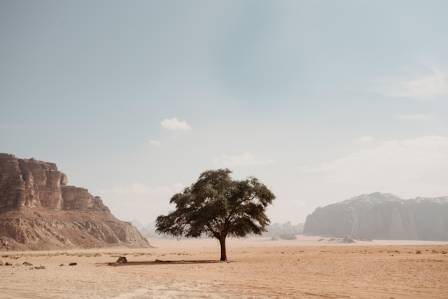
The Sahara Desert is one of the harshest environments on Earth, where survival is extremely difficult under intense heat and endless sand. Yet, for centuries, a single tree managed to endure in this remote wilderness—only to eventually be destroyed by a moment of human error.
Leo Hawthorne
Desk writer
Spotlight note
The full essay continues below the still.
Reel
Midnight Cinema Desk
The Sahara Desert is one of the harshest environments on Earth, where survival is extremely difficult under intense heat and endless sand. Yet, for centuries, a single tree managed to endure in this remote wilderness—only to eventually be destroyed by a moment of human error.
A Tree in the Middle of Nowhere
The Tree of Ténéré was an acacia (classified more precisely within the Vachellia genus) that stood in the Ténéré region of northeastern Niger. It became famous for being the only tree visible across an enormous stretch of desert.
Long ago, the area was likely part of a greener landscape filled with vegetation. Over thousands of years, climate changes reduced rainfall, causing forests to disappear and leaving only scattered remnants of plant life.
By the time it was documented by outsiders, the Tree of Ténéré stood alone in a region surrounded by more than 400 kilometers (around 250 miles) of empty desert in every direction. It was so distinctive that it appeared on maps and served as one of the few navigational markers in the region.
A Landmark for Travelers and Caravans
For generations, the tree functioned as a crucial waypoint for desert travelers. Caravans carrying salt, dates, and other trade goods would pause there during their long and dangerous crossings.
It became more than just a natural object—it was treated as a sacred meeting point and a symbol of survival. Many travelers relied on it as a guidepost in a landscape with almost no visible landmarks.
Even military explorers who encountered it were struck by its unlikely existence. Reports from early observers described it as almost unbelievable, a living reminder of resilience in extreme conditions.
How the Tree Survived
Despite the dry environment, the tree managed to survive thanks to an underground water source. Later drilling in the area revealed that its roots extended roughly 35 meters (about 110 feet) downward to reach hidden groundwater.
This deep root system allowed the tree to persist even as the surrounding desert remained dry and lifeless.
The tree itself was small, only a few meters tall, with sparse branches—but it endured for centuries in isolation.
Damage and Final Collapse
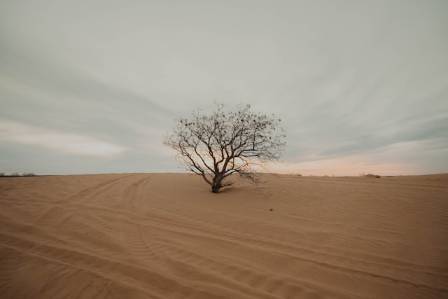
The Tree of Ténéré’s survival ended not through natural causes, but through human accidents.
In the 1940s, a truck driver reportedly struck the tree, breaking one of its trunks. The damaged section was cut away, but the remaining part survived.
Decades later, in 1973, another truck accident brought the final collapse. A Libyan driver collided with what remained of the tree, snapping it completely and killing it. Whether due to inattention, exhaustion, or poor visibility from desert conditions remains uncertain.
After centuries of standing alone, the tree was gone.
Legacy and Memorials
The remains of the Tree of Ténéré were later moved to the National Museum of Niger in Niamey. At its original site, a metal sculpture was erected as a memorial, though it lacks the natural presence of the living tree.
The tree’s image also appeared on commemorative stamps, honoring its symbolic importance to Niger.
In modern times, artists and festivals have recreated tributes inspired by it, including a large illuminated installation at the Burning Man festival in 2017, celebrating its role as a gathering point for travelers and communities.
A Lasting Symbol
Although the Tree of Ténéré no longer exists, its story continues to resonate. It represents both the extraordinary resilience of life in extreme environments and the fragility of even the most enduring natural landmarks.
Its legend endures as one of the Sahara’s most remarkable tales—of survival, isolation, and an unexpected end brought about by chance.
More from the desk

· Mono
The Impact of Digital Technologies
Technological innovation holds tremendous potential to make the world more equitable, peaceful, and just. Digital tools can support the achievement of all 17 Sustainable Development Goals, from eradicating extreme poverty and reducing maternal and infant mortality, to promoting sustainable agriculture, decent work, and universal literacy.

· Mono
Computers Change Life
In the modern world, computers are no longer just machines—they are essential tools that help us turn ideas into reality at lightning speed. Whether in communication, work, education, or entertainment, computers have transformed how we live, think, and create. This article explores how this remarkable tool has reshaped different parts of our daily lives.

· Mono
A Marmot's Life – The yellow-bellied marmots
Marmots come out of hibernation in April and early May, often when the landscape is still covered in snow and very little food is available. This is also a particularly dangerous period for them because predators are waiting for opportunities to catch the newly emerged animals. Foxes and coyotes have been observed waiting near the entrances of snow tunnels leading from marmot hibernacula, ready to capture marmots as they emerge.

· Mono
12 Irresistible Summer Drinks to Beat the Heat
Check out some of our favorite fruity summer drink recipes — we've included both cocktails and mocktails so everyone can join in on the fun. Mix these refreshing cocktails, coolers, punches, infused waters and more up for your next picnic or poolside gathering, and watch them go quickly.

· Mono
Pamukkale, a natural fantasy wonderland
Alongside Cappadocia, Pamukkale is considered one of the most remarkable destinations in Turkey’s Anatolia region. This extraordinary landscape is the result of both natural geological processes and centuries of human influence, attracting millions of travelers from around the world every year.

· Mono
George Hendrik Breitner – Girl in Red Kimono
Each year, as winter slowly fades into spring and the first pale blossoms appear against the cool evening sky, a familiar sensation returns. It is a quiet yet overwhelming longing, difficult to define, leaving the mind drifting and the heart restless. This condition could be called a deep fascination with Japonism. Thoughts turn to cherry blossoms, tranquil gardens, shadowed temples, lantern-lit paths, flowing kimono, and the balance between vibrancy and calm. The only relief comes from immersing oneself in Ukiyo-e prints, contemplating their strange beauty, absorbing the restrained harmony of Whistler’s muted paintings, and listening to Debussy’s music, which evokes fragrant, moonlit gardens where blossoms seem to whisper their secrets.