← Back to desk4 min essay
Labor in Focus: Paintings that Honor Work

Cinema essay

Labor in Focus: Paintings that Honor Work

Observing Labor Day through an artistic lens offers more than a holiday break—it invites reflection on how painters have historically represented the skill, effort, and everyday reality of work. The following works—from household chores and factory floors to bustling markets, harvest fields, and civic engagement—present labor as essential to life while also providing invaluable lessons in composition, color, and technique for contemporary artists.

S

Sophie Whitman

Desk writer

Spotlight note

The full essay continues below the still.

Reel

Midnight Cinema Desk

Observing Labor Day through an artistic lens offers more than a holiday break—it invites reflection on how painters have historically represented the skill, effort, and everyday reality of work. The following works—from household chores and factory floors to bustling markets, harvest fields, and civic engagement—present labor as essential to life while also providing invaluable lessons in composition, color, and technique for contemporary artists.

Lilly Martin Spencer, The Jolly Washerwoman (1851)

Spencer’s luminous and playful painting transforms domestic work into a source of pride. Notice the shimmering wet fabrics, warm skin tones, and the realistic daylight reflected on surfaces. Sharp edges on hands and implements emphasize narrative importance, while the palette relies on stable earth tones—ochres and umbers—complemented by confident strokes of opaque highlights, rendering the cloth and water vividly yet never sentimentally.
Studio Tip: To evoke sunlight on fabric, create strong contrasts between opaque highlights and cool, transparent shadows. Mix highlights from lead white with warm earth tones to avoid chalkiness, and let shadows remain thin to give material a sense of life. Keep edges firm where they carry narrative weight, like hands or pails, and allow peripheral folds to recede softly.

Jean-François Millet, The Gleaners (1857)

Millet’s famous composition portrays bending figures with quiet grandeur. A low horizon and expansive sky grant dignity to the workers, while muted earth tones and restrained blues prevent melodrama. Every element supports the rhythm of labor.
Studio Tip: Lower the horizon and simplify the sky to emphasize the stature of figures. Model forms with subtle value transitions instead of intense chroma, reserving sharpest contrasts for hands, tools, and the bowed silhouettes that anchor the painting.

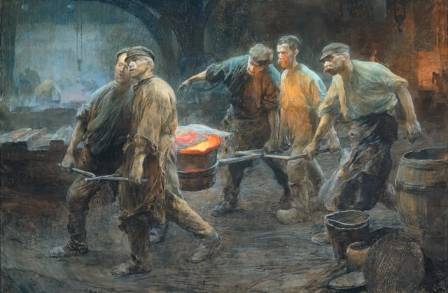
Paul Raphael Meltsner, American Landscape

This WPA-era industrial painting depicts furnaces, cranes, and night-lit machinery as awe-inspiring. Human labor is embedded within an engineered environment, while smoke-tinted blues and furnace oranges create a believable atmosphere without sacrificing structural clarity.
Studio Tip: Begin by mapping architectural shapes—horizontal conveyors, vertical stacks, and diagonal cranes. Underpaint with cool tones, then glaze warm transparencies over furnace areas to convey heat without sacrificing form. Use softened edges and compressed values for distant smoke, and reserve sharp, high-chroma accents for foreground elements like molten metal or lit structures.

Ben Shahn, Freedom of Speech (study for a Four Freedoms mural, 1941)

Shahn’s social-realist drawing emphasizes civic labor—the act of speaking and listening. Diagonals and grouped values guide the eye through hands, papers, and faces, with simplified forms enhancing clarity.
Studio Tip: Organize your composition by value first. Mass listeners into a single mid-tone shape, placing the strongest contrast on the speaker’s hands and face. Use a toned ground to judge mid-values and establish guiding diagonals, maintaining deliberate edges for legibility.

Francis de Erdely, The Fish Market (c. 1945–50)

De Erdely highlights immigrant labor through minimal but expressive gestures. Hands, profiles, and baskets tell the story, while subdued chroma unifies skin, wood, and fish.
Studio Tip: Use economical brushwork—a few strokes can imply texture or shape. Moderate color intensity to harmonize elements, saving brighter accents for reflective surfaces like metal pans or wet fish.

Ogden Minton Pleissner, Reaping Along Wind River, Wyoming

This western harvest scene captures long, rhythmic motions under expansive light. The color scheme—straw, sky, scrub, denim—is restrained, allowing gesture and space to convey continuous labor.
Studio Tip: Arrange light and shadow in bands across the landscape, integrating figures rhythmically. Use mid-value fields with darker figures to emphasize repeated gestures. Keep distant forms soft and edges varied for depth, while near figures remain sharp and immediate.

Technical Observations for Depicting Work
1.Value First: Organize scenes by action and gesture. Hands, tools, and posture read clearly when value groups are distinct.
2.Palette: Earth tones, moderated with blacks, create a versatile neutral base for skin, fabric, metal, and dust. Subtle temperature shifts convey warmth or coolness naturally.
3.Edges: Firm edges highlight narrative points (hands on tools), soft edges suggest atmosphere (cloth folds, drifting smoke). Alternating sharp and soft edges maintains clarity and rhythm.
4.Surface Preparation: A textured ground allows broken color to suggest material without overworking detail.
5.Glazing: Apply transparent warm layers sparingly over cooler underpaint to suggest heat, humidity, or grime while preserving structural integrity.

Observing Labor Today

Spend time watching work unfold—at early-morning markets, repair shops, or construction sites. Note signature gestures: how hands handle tools, shoulders bear weight, and posture defines effort. Let tools, light, and body movement communicate character before adding decorative detail.
Create small on-site value studies, then expand into larger studio works. Simplify forms into coherent shapes and use selective edges and accents to tell the story. With drawing and value doing the heavy lifting, the final painting honors both laborers and their work.

More from the desk

The Most Captivating Orange Cats: A Breed Guide

· Mono

The Most Captivating Orange Cats: A Breed Guide

Orange cats captivate with their vibrant coats and distinct personalities. From classic American shorthairs to majestic Maine Coons, these sun-kissed felines bring warmth to any household. Let's explore ten popular breeds that produce these gorgeous ginger cats, each with unique characteristics and charm.

7 Coastal Towns with the Most Beautiful Night Views You Might Never Have Heard Of

· Mono

7 Coastal Towns with the Most Beautiful Night Views You Might Never Have Heard Of

When people think of coastal getaways, famous destinations like the French Riviera, Miami Beach, or Copacabana often come to mind. These places are indeed spectacular, but their popularity sometimes overshadows lesser-known gems that hold an equally captivating allure—especially when night falls.
See The World’s Most Beautiful Winter Towns

· Mono

See The World’s Most Beautiful Winter Towns

When snow covers the landscape, some destinations transform into breathtaking winter retreats. The perfect winter escape is often found in a charming town where beautiful scenery, local culture, outdoor adventures, and relaxing experiences come together to refresh the body and mind.
10 Amazing Things Mt. Fuji is Known For

· Mono

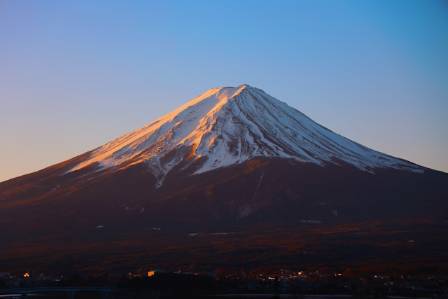
10 Amazing Things Mt. Fuji is Known For

As the tallest mountain in Japan and a designated UNESCO World Heritage Site, Mount Fuji has long fascinated artists, pilgrims, and travelers. Surrounded by lakes, hot springs, shrines, and seasonal landscapes, it represents far more than a scenic landmark—it stands as a powerful symbol of Japanese identity, nature, and spirituality.

The Most Impressive Race Cars In The Industry

· Mono

The Most Impressive Race Cars In The Industry

The world of motorsport is filled with high-octane excitement, from Formula 1 circuits to the unpredictable challenges of rally racing. Across the globe, manufacturers compete in multiple championships each season, constantly pushing engineering limits to build faster, sharper, and more capable machines. A few cars, however, rise above the rest and earn legendary status.
Smart Design Ideas for Creating the Ultimate Child Bedroom

· Mono

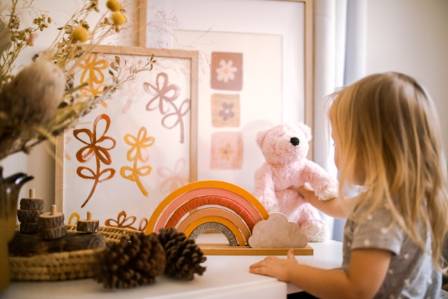
Smart Design Ideas for Creating the Ultimate Child Bedroom

Transforming a child's bedroom into a functional yet magical space requires balancing vibrant creativity with practical utility. The ideal room must encourage imagination while incorporating smart storage solutions and a design foundation that easily adapts as the child grows older. By focusing on flexible layouts, durable materials, and interactive surfaces, you can create a personalized sanctuary that handles the chaotic demands of playtime, rest, and study.